
01
Hot for the paddle ache
Hot water at 38–40°C loosens the shoulder, lat and intercostal tightness that builds across a session. The Tidal-Eco adds 138 air jets and three SyncJet nozzles to work the spots a soak alone can't reach.
A portable spa built for the way Kiwi surfers actually finish a session — hot water for paddled-out shoulders, the option to run it cold for inflammation, and 10–15 minute setup wherever the swell pulls you.
The wetsuit's hanging. The board's leaning against the rail. Salt in your hair, sand still somewhere it shouldn't be, that low ache behind the shoulder blades that always shows up about an hour after the last wave. A quick hose-off first — salt, sand, the last of the sunscreen — then you step in. The water takes your weight. The first thirty seconds is your face — wind-burnt, salt-stung — going soft again. Then it's the shoulders. Then it's the rest. Outside, the offshore's dropped to nothing and the sea has gone glassy and dark, and you are exactly where the day was always headed.
Most spas are designed for a single use: hot. An MSpa works both ways. Heater on for a warm soak when you've come in chattering. Heater off and the water settles to ambient — cool in summer, properly cold in winter — for the days you've come in burning. One footprint, both ends of the recovery story.
Hot water at 38–40°C loosens the shoulder, lat and intercostal tightness that builds across a session. The Tidal-Eco adds 138 air jets and three SyncJet nozzles to work the spots a soak alone can't reach.
Turn the heater off and the same spa becomes a cold plunge — the water settles to ambient and sits cold in winter, cool in summer. Useful when you've over-cooked it on a longer session and want the swelling out of your shoulders before tomorrow's dawnie.
Cocoon-Eco's EPE pearl-foam panels keep it whisper-quiet on the deck — no compressor roar drowning out the surf, just steam and the sound of swell on the rocks.
Deflate, fold, lift. The Bergen is the lightest in the range at 24.5 kg packed — light enough that one person can load it into a wagon boot with the boards still on the roof. Sets up on the bach deck in around 10 minutes, runs from the same 10-amp socket the jug plugs into. No consent, no electrician, no concrete pad. Roll up at the beach house, plug in, fill, walk back to the water.

Surf the dawn patrol. Come home cold, eat something, and step into 40°C while the tide turns. By the time the afternoon glassoff lights up, you're warm, loose, and ready for the second session of the day.
Surfing isn't one stress on the body — it's three at once. The constant low-grade isometric load of paddling and duck-diving, mostly through the shoulders, lats and obliques. The repeated explosive load of pop-ups. And the slow drain of cold water pulling heat out of you for two or three hours straight, even in a 4/3. By the time you're walking back up the dune, your body's running a different kind of fatigue to anything you can fake in a gym.
An MSpa is the only piece of recovery kit that lets you answer all three. Hot water at 38–40°C is the simplest, oldest fix for paddling tightness — blood flow up, shoulders unhook, that dull dragging ache in the lats softens to a hum. Run the Tidal-Eco with its 138 air jets and three SyncJet nozzles and you can put hydromassage exactly where the paddling burn lives.
And on the days the body's asking for the opposite — a sunburnt three-hour session, an over-cooked Sunday at the point — turn the heater off entirely. The water settles to ambient: cool in summer, properly cold in winter. Same footprint, same plug, no separate cold-plunge setup, no ice delivery.
Kids and partners get the warm version. You get whichever your shoulders are asking for. One spa, two answers, no debate.
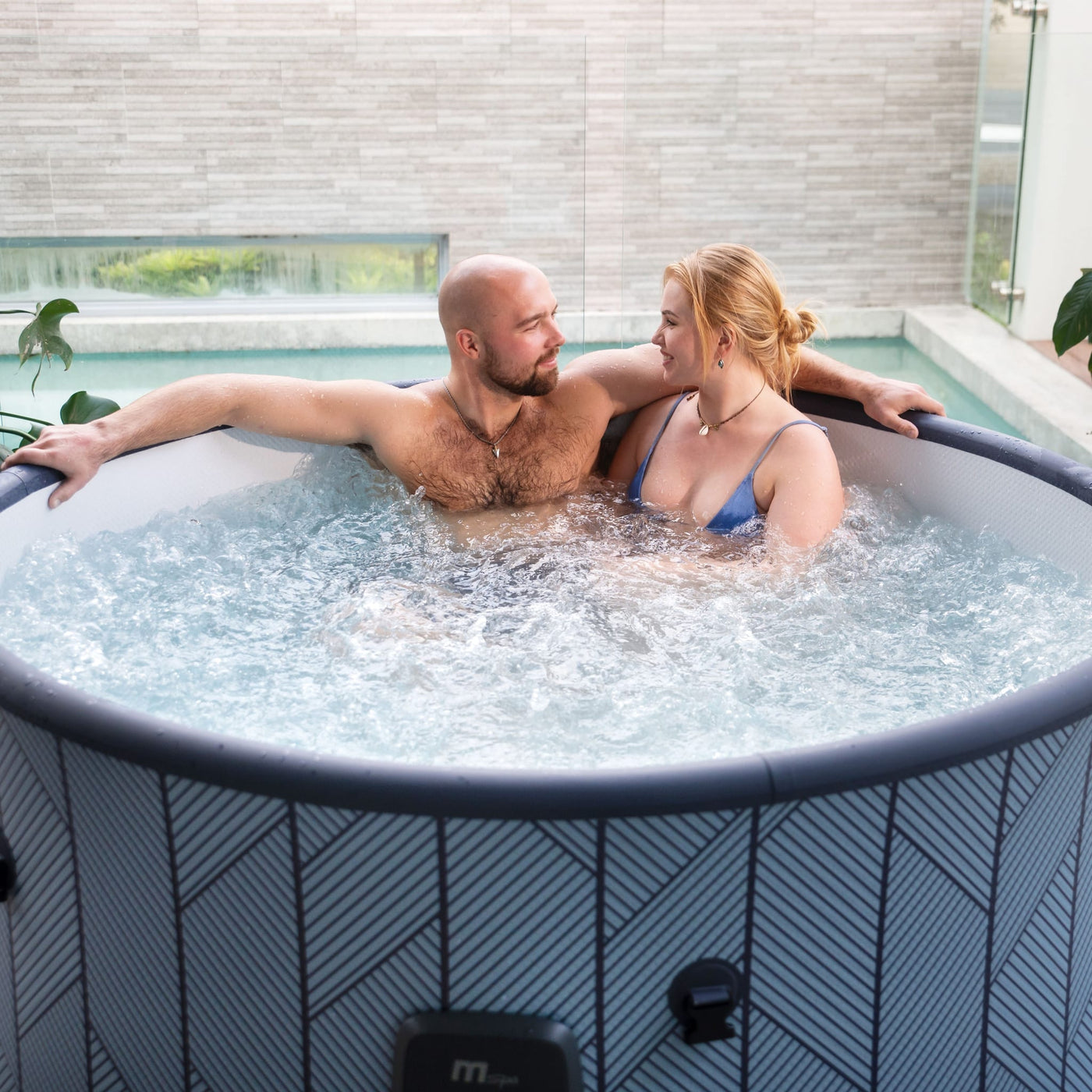
The one we'd put on a surfer's deck. 138 air jets and three SyncJet hydromassage nozzles work directly into the shoulders, lats and lower back — exactly where paddling fatigue settles. DWF drop-stitch construction keeps the sidewall rigid against a 4/3 leaning on it. Two layers of water hygiene work in parallel: a quick freshwater rinse before each soak keeps salt, sand and sunscreen out of the water (a must, so they don't clog the filter, dull the liner, or shorten the spa's life), and UVC-PLUS sanitisation handles up to 95% of bacteria in the water itself. Between them, it's one of the healthiest portable spas you can put on a coastal deck.
The fastest-heating spa in the range — 1.9–2.6°C per hour from EPE pearl-foam panels that cut energy use by up to 38%. Whisper-quiet too, which matters when the bach is right above the break.
View the Cocoon-Eco MSpa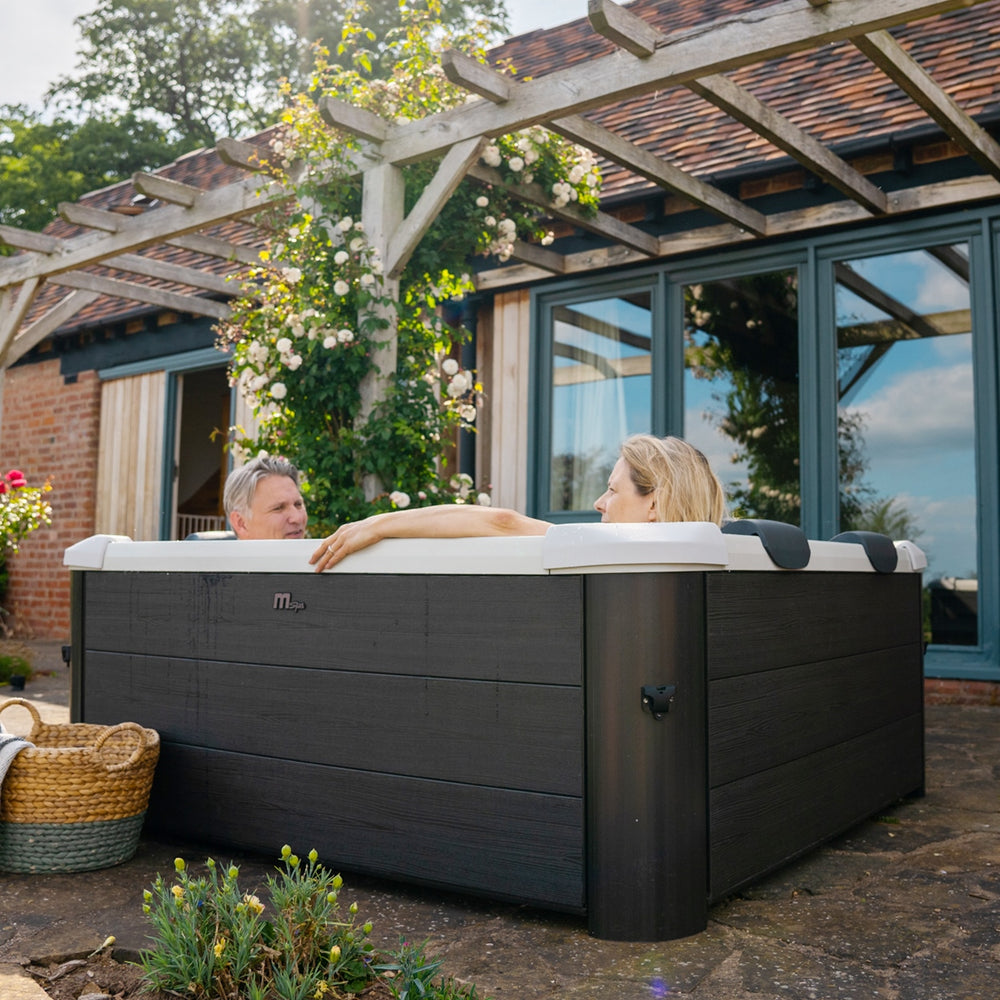
Premium insulation and the lowest running cost in the MSpa range. The pick if you'll be using the spa most days of the week — the daily-driver, not the weekend-tripper.
View the Oslo MSpaReally impressed with the quality, it's definitely worth paying the extra dollars for a really decent portable spa. I use it pretty much every day… looking forward to jumping in after those winter surfs.
Setup of every MSpa from Portable Spas NZ is 10–15 minutes from the box. The Bergen and Tekapo self-inflate; the Mono and Tidal-Eco need a few minutes on the hand pump; and the Oslo, Rova, Denver and Cocoon-Eco only need the insulation bladder inflated, which the control unit takes care of. Pump, heater unit, insulated cover with safety lock, and a 120 Pleat Filter Cartridge are all in there — fill from the garden hose, plug into a 10-amp socket, set the temperature and let the heater bring the water up overnight (around 1–2°C per hour).
You'll want to keep one habit: rinse the salt and sand off you (and the wetsuit) before you climb in. Filters last 4–6 weeks under regular use; the team can talk you through bromine, pH and the water-testing routine — there's a free Portable Spas water-testing app that does the maths for you.
Straight answers on contrast therapy, salt-air durability, hydromassage for paddling fatigue, and using an MSpa as part of a real surf routine.
Yes. The heater dials the spa to your chosen soak temperature; turn it off and the water settles to ambient (properly cold in winter, cool in summer). Plenty of customers use the MSpa as a cold plunge after intense sessions, then re-engage the heater when they want the spa warm again. One unit, both jobs — but note the cold side is ambient, not refrigerated.
The Tidal-Eco. It pairs the standard MSpa air-jet ring (138 jets) with three SyncJet hydromassage nozzles that produce a directional water-and-air massage — strong enough to actually work into the shoulder, lat and upper-back tightness that paddling builds up. The Cocoon-Eco has 130 air jets if you want a slightly gentler version.
Dave Clark, the owner of Portable Spas NZ, had his first MSpa sitting next to his caravan on the hillside at Ahipara. It's now on the deck looking out to Shippies and up Ninety Mile Beach — nearly six years old and still running. He'd say MSpas handle New Zealand's salt air with ease. To make a coastal spa last: keep the cover sealed when you're not in it. The control unit also lifts cleanly off for indoor storage between trips if you'd prefer to be careful, and replacement parts are stocked in NZ.
Yes — and your filter, your control unit and your spa liner all thank you for it. Sand, sunscreen and salt are hard on every part of a spa: they clog filters, dull the liner over time, and can find their way into the electronics. A quick freshwater rinse outside the spa before stepping in is the single simplest habit that protects all three. Cartridges are designed to be replaced every 4–6 weeks under regular use anyway.
From a cold fill, an MSpa typically takes 12–24 hours to reach full temperature depending on model and ambient conditions. The Cocoon-Eco is the fastest heater in the range at 1.9–2.6°C per hour. Most surf-household customers leave the spa on at temperature with the cover sealed — it's more energy-efficient than letting it cool down and reheating from scratch.
Yes — that's the point of portable. Deflate, drain, pack into the boot. At the other end you need a flat patch of deck with 60cm of clearance, a 10-amp socket, and a garden hose to fill. From there it's 10–15 minutes to inflated and filling. Plenty of customers run their spa between a town home and a coastal bach across the year.
Yes — every MSpa in the Verto and Frame series, including the Oslo, Cocoon-Eco, Rova, Denver, Tidal-Eco and the Mono range, includes WiFi and remote management through the MSpa app on your phone. Turn the spa on from the road on the drive up so it's at temperature by the time you walk through the door at the bach.
Yes — with adult supervision and the family setting of 38°C (rather than the full 40°C) for younger kids. Cocoon-Eco includes a safety-lock cover and an anti-slip floor; the Oslo includes a six-point safety cover. One thing to know: every MSpa cabinet sits under 76 cm, which is the threshold NZ regulations use for fencing requirements. The simple solution is to sit the spa on up to 100 mm of high-density foam or polystyrene — that raises the effective side height to the regulated 76 cm, and it doubles as floor insulation that improves comfort and reduces running cost.
Portable Spas New Zealand is the country's dedicated MSpa specialist — proudly Kiwi owned and operated. We work exclusively with the MSpa range, which means when you call us about jet placement, foam-panel insulation, what the SyncJet really feels like, or whether the Tidal will hold temperature on a Southland deck in July, you get an actual answer.
We aren't here to sell luxury. We're here to make a good spa accessible to the kind of New Zealander whose weekends already get the body — surfers, parents, tradies, ski families, hikers, swimmers, anyone who finishes a day with something tight. Phone diagnostics, NZ-stocked parts, DIY videos and a water-testing app — all part of the deal, all included.
Hot for the shoulders, cold for the inflammation, ten to fifteen minutes to set up, twelve months of warranty. The spa that earns its spot on the deck.